

MUELLER-CATOIR; BETTER LATE THAN NEVER

How lies the land at Müller-Catoir these days?
To clarify my biases, I am friendly to the domain. I imported them for many years. And to defend my biases, they formed because the wines are always good and often superb, and I have learned to expect it to continue. So whether that is a “bias” or just a reasonable expectation based on decades of empirical input….well, you tell me.
From the early 60s until 2002 the estate was based on a tandem, between the then-proprietor Heinrich Catoir and the cellarmaster (and legend) Hans-Günter Schwarz. If memory serves, the two met at wine university, formed and maintained a friendship, and the rest is history. I first learned of the domain – relatively obscure at the time except to insiders – from a book (by Hans Ambrosi) called Where The Great German Wines Grow. 98% of the estates named therein were the “usual suspects,” alongside of which was this out-of-the-way place in the Pfalz, which I was quickly driven to explore.
I met neither Mr. Schwarz nor Mr. Catoir on that first visit. In fact I met neither of them for several years, when I’d started assembling a portfolio and was pitiably desperate to include Müller-Catoir in it. From the first sample in the very first visit I knew something literally extraordinary was taking place here. As I grew more deeply familiar with the wines I had to surmount my reluctance to issue exclusive superlatives, because it was clear that the estate was in a class by itself. The “best in Germany?” I was willing to stick my neck out and say that.
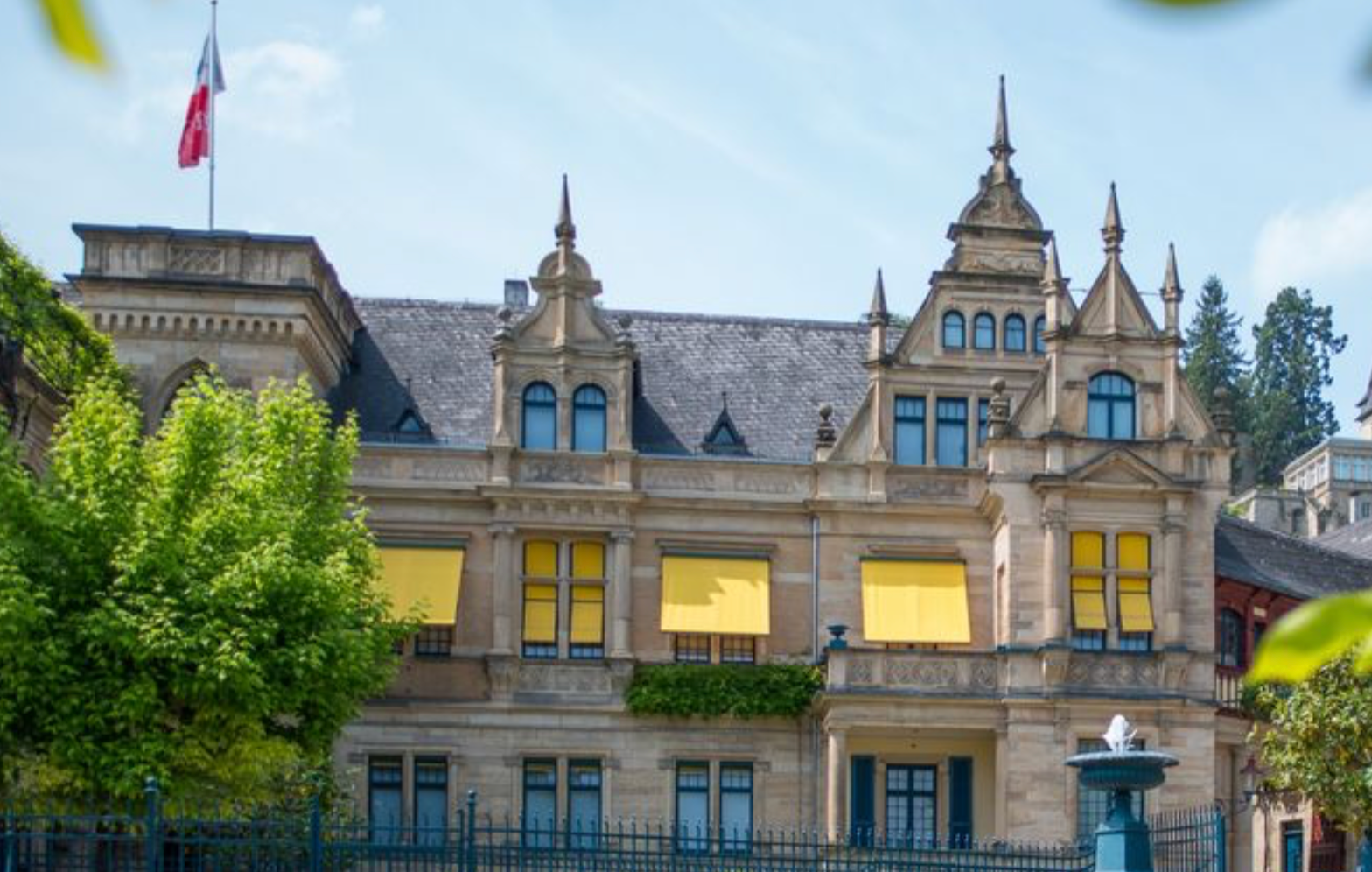
It was a golden era at the monastic-feeling estate up on its hill above Haardt, with the terraces behind it and a narrow road leading to the castle above. Not to mention the lemon tree in the courtyard, a proud citizen of the more clement Pfalz climate. In those days Mr. Catoir seemed averse to publicity or to “making the scene.” He had mixed feelings about having an American importer, and he never seemed pleased at the reviews and PR my advocacy engendered. Yet within these walls a revolution was taking place, thanks to the singular genius of Hans-Günter Schwarz, and the many apprentices he sent away galvanized, into an ad-hoc army of Schwarz acolytes, many of whom stand among the greatest names in German wine today.
It bears mentioning that the estate is a so-called “Meisterbetrieb,” i.e., a winery with official dispensation to take on apprentices, as Schwarz and Martin Franzen (who succeeded him) are certified Meisters. (Franzen’s students, many of whom I’ve spoken with, think the world of him and laud him to the skies for his teaching acumen.)
The current proprietor Phillip David Catoir is less retiring than his father was, and the estate is at least moderately more visible, or at least as visible as my friend’s introverted temperament will permit. (I speak as a fellow introvert, with affection for all of similar makeup.) The estate doesn’t seem to be “trendy” nor to care about being trendy. Theirs is a purity of purpose that still can feel monastic, and this is sometimes reflected in the wines. Especially the Rieslings.
I refrain from issuing grand pronouncements based on the 2024 vintage, or indeed of the few that preceded it. But I’m glad to float hypotheses and suggest a few theories. One is, while I don’t find the estate “singular” any longer, I do find it exceptional, rarefied, and in the finest possible way, unusual.
How so? Well, if you’re included among the serious Riesling estates in Germany, you almost always want your Rieslings to make statements, to be impressive, to gesture toward tangible significance. But Martin Franzen has aims of his own.
He told me the coolness of his Rieslings was a result of his emphasis on structure and specifically on a harmony and purity of that structure, about which, he says, “If the structure is in place the fruit will follow.” He isn’t concerned with a bold flavor statement in his baby-Rieslings, but rather on a sideways sort of ultra-violet impact. He doesn’t chase “points” with his Rieslings yet he gets them anyway, such is the quality and purity of aroma in these ostensibly self-effacing wines.
Yet while I respect, honor and appreciate Franzen’s Rieslings, I begin to feel the best among the estate’s wines lie elsewhere.
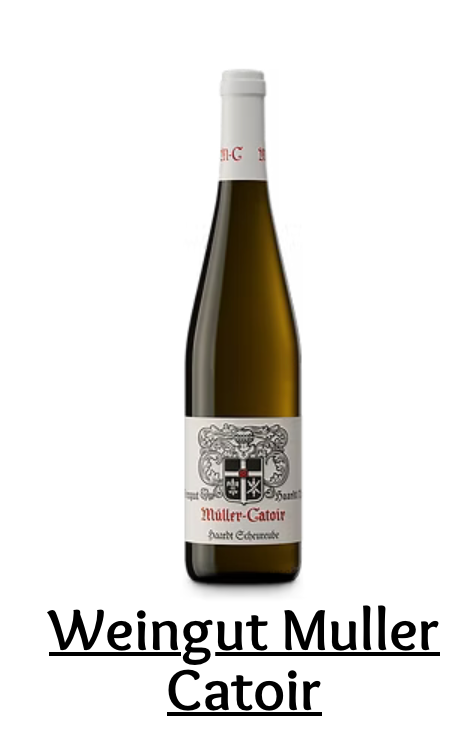
It has been clear for some time that Müller-Catoir is the preeminent grower of Gelber Muskateller (dramatically) and Scheurebe. There’s no sensible disputing this. Neither are these trivial grape varieties. They were unfamiliar to Franzen when he became cellarmaster twenty three years ago, and he admits to being wary of forming a relationship to them equivalent to that of his predecessor’s, but Schwarz left the vineyards in impeccable condition, such that a competent vintner could make, at a minimum, interesting wines. That Franzen has surged ahead to making wines at an apex of profundity is an admirable achievement.
But other dramatic developments need our attention. One is the remarkable quality of the Spätburgunders, which threaten to stand alone for their sheer distinctiveness, even if they weren’t also aristocratic and delicious. It’s been at least three vintages now, and if I were a younger geezer I’d be looking to score a lifetime supply for my cellar, before tout le monde caught on to the scintillating beauty of these wines.
The second development is still hypothetical at this point, but if the 2024 Weissburgunders are a harbinger of things to come, we need to welcome a new elite producer of Pinot Blanc, and maybe make a place at the head of the table.
We can’t conclude without addressing the striking successes with Rieslaner. My only caveat is the emphasis on intensely concentrated (albeit electrifyingly brilliant) sweet wines. One taste of any of these masterpieces – and they are masterpieces – leads one to wonder what sort of wine Rieslaner might offer at less exalted levels of ripeness and sweetness. Perhaps this is impractical from a harvesting standpoint – yet still I wonder.
And so we survey the latest vintage from the least conspicuous among the most consequential of Germany’s greatest wineries.
We begin with reds. Lately I’ve found the reds to be sensational and original. So what now?


Comments