

CHANGING PALATES


It started with an email from Jancis Robinson. I was one of a bevy of wine folk she surveyed to see if we had too much wine in our cellars. I was tempted to reply “Doesn’t everyone have too much wine in the cellar?” (Aside – most of us do.) But my reply had a nuance. I have too much of the kind of wine I don’t reach for very often any more, and not enough of the wines I reach for constantly. That is because my preferences have changed. I don’t see how a person can drink wine for 30-40 years and not have their preferences change. Nothing else in our lives remains static for decade after decade; why should our taste in wine not evolve?
So I did a little survey of my own. I asked some people I know whether (and how) their tastes may have changed. This was spurred on by an exchange with a friend who reported a significant change in her palate following major surgery, and was further complicated by menopause. Her melancholy situation was more a matter of actual physical palate (and the body it lives in) than an aesthetic shift in preferences, though the latter may follow behind the former.
My question was divided into two parts. A third part arose in talking about the first two, engendered by an unusually insightful comment from one of my correspondents, and I’ll address it later, as it belongs at the end.
But the headline is, I’ve had enough change in preferences I assumed my case had to be typical. It seems it is not, and I am (again) in a minority. This took me aback. I wondered if I phrased my question unclearly. Here’s what I asked: you tell me if it isn’t clear.
"I am asking a few people I respect about the degree to which their palates have changed over time.
I don’t mean only the strict physical sensorium but also the underlying temperament and sensibilities.
My questions: Would you be so kind as to describe how your palate may have changed over the years? And to the degree it has changed, how much might be due to the normal physical and somatic changes of age, and how much to the effects of memory and experience?”
Most respondents disavowed having any changes in taste at all. (Those who review wine for a living probably had their “consistency” to defend, lest readers grow suspicious that a writer’s judgments are all over the place.)
Some respondents wrote lengthy essays which, while brilliant, didn’t actually answer the question I thought I had asked.
Honestly I think the palate question is simple. To give one concrete example, people of a certain age are known to suffer an atrophy of the reflex that tells us we are thirsty. We have to remember to drink. Thus we are more often dehydrated, and this has an obvious effect on what the palate receives. Yes, “palate” is two things – what we taste and how we interpret what we taste. We know this. But it starts with the tongue. It’s why I split the question. I don’t see how a palate can do anything but change over a whole adult life. But I may be wrong, and my hypothesis may be too narrow to account for the vagaries of human experience. But it’s what I believe, for now.
I will excerpt from the responses I received where they seemed pertinent.

My friend Jon Bonné, whom I hold in great esteem, gave me my first surprise, writing:
“In terms of palate and change, honestly, I don't know that it has. it's totally possible that it has shifted and, I dunno, maybe now I don't perceive the notes of dragonfruit in a Graacher Himmelreich and green papaya in a Dhroner Hofberg that I once did.”
TERRY: This is less a shift in taste than a possible reduction in acuity, or more likely, a preference to concentrate less on the minutiae of wine flavors. That gets old after a while, and many of us want to reclaim the early experience of relaxingwith wine.
Jon continued: “The act of tasting also has become a different thing. the endless sommelier bullshit and nitpicking is, if not dead, then destined for a similar fate to Kristi Noem's dog. (too soon?) the basic art of interpreting quality and its nuances — texture, ripeness, complexity — is still very much alive, though. and I don't know how much you need to be a savant to do that. That shift has also allowed me to just ENJOY wine, in a way I never have before.
I suspect that might put me closer to where, say, Oz Clarke is in his appreciation. and honestly, thinking on it, I'd assert that's where Hugh Johnson ended up too. and i'm great with that. both are good examples of proving what you have to prove, and then moving on to love wine in a more honest and pure way. and I'd love if that's where a lot more people end up.”
TERRY: Given Jon and I agree on that, it still compels the question of whether the newly relaxed palate (and the person behind it) has altered or renewed his relationship to wine in a way that may change what he prefers to drink. In Jon’s case it doesn’t seem to have; in my case it did. Of course I have a few years on Jon, so who knows; he may be in for some surprises.

But David Schildknecht has a year on me, yet he wrote saying: “My impression is that I am only very slightly less sensitive to the organoleptically given. As far as recollections and connections, though, including “tastes like” similes, I am much slower in calling them to mind. The upshot is that I have to be a bit more patient with myself when tasting.”
The other half of my question is left dangling….

Andrew Jefford addressed my questions as follows: “Acuity is significant, since (science tells us) we peak at age 11 and it's downhill all the way after that. Next month, I will be 11+59. I expected to be further downhill than I seem to be; maybe I've been lucky. But I'm regularly doing tastings for WOFW as well as DWWA &c and honestly I haven't noticed any significant loss of acuity thus far.
The main difference over time is that I've given up trying to like wines that I just don't like. This particularly applies to high-acid reds (especially if obviously oaked), so I just avoid Barbera, Blaufränkisch, most red Burgundy and global Pinot, the St Joseph/Cote Rotie end of the N Rhone, many ambitious antipodean reds, Merlot made by anyone who considers Merlot "the red Sauvignon Blanc" (yes, some do!) and anything early-picked "for freshness".
TT: (Struggling mightily not to rise to the bait re. Blaufränkisch) In my younger days I relished a lot of acidity (in white wines) and insisted on the right amount of sugar to make the dialectic work. These days I am far less tolerant of high acids - I rather innately distrust them - and my cellar is alas replete with wines sweeter than I prefer to drink these days. Some of this has to do with what I’ll fancifully call the larger ambience, i.e., since we moved north to Boston we have more cold weather of the type that asks for smoother, richer wines, so that the German Riesling “season” is compressed into fewer weeks.
I never thought my own palate was especially acute, but I compensated with good powers of concentration, a talent for constructing a general architecture of Flavor (or Type) and understanding where any given wine fit within it, and who were its neighbors. I was and am unafraid of imagination. The writer Sigrid Nuñez says “You don’t need a plot: you need a story.” And in tasting notes I feel the story precedes the “plot” or at least walks beside it.

I had a good clear response from Peter Liem, not surprising as Peter’s a good clear thinker and tastes wine with a rare calm. Peter writes: “I don't think I physically taste any differently now, not significantly anyway, and I don't feel like my palate has changed dramatically over time. I used to hear this from people when I was younger, warning me that my palate would be different when I was older. But I don't feel like it's happened to me. As far as aesthetic preferences go, I feel that while my core aesthetics remain the same, I've become more tolerant of minor issues (riper fruit, lower acidity) and less tolerant of things that I perceive as faults (mousiness, brettanomyces, botrytis). Which I suppose reflects my views of the larger world: as I've grown older, I've become more tolerant of, say, screaming kids on planes and people who walk slowly on sidewalks, and less tolerant of things like Trumpism and bigotry. Wine-wise I seem to enjoy all the same things that I did 30 years ago: champagne, Burgundy, nebbiolo, riesling, chenin, sherry, madeira. But one issue now is that the wine world has changed (whether from climate change or human aesthetics), and there are things that have become rarer or that no longer exist—1970s-style Mosel Kabinett or low-alcohol red wines, for example—and I miss those. If anything, I sometimes feel like my palate has remained stubbornly anachronistic, like a relic from the past.”
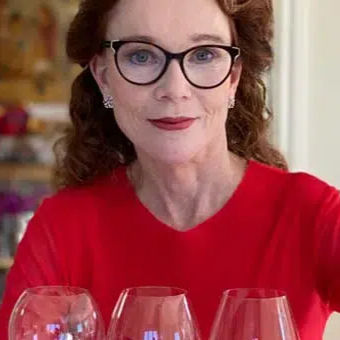
My friend Karen MacNeil began her reply with a telling fact: “UC Davis has done research (I’m pretty sure it’s them) indicating that women’s ability to detect smells is better than men’s—but true only for women of child bearing age. After menopause, we’re back with the guys!
‘I’ve never approached wine according to the common paradigm: color/aroma/flavor/finish. And I’ve never adhered to the “grid” known to every WSET student.
As for age, I believe that my 40 years of writing about wine has taught me to be more careful (no rushes to judgment) and much more intuitive. I want to “feel” the wine more than I want to analyze it, per se. I want to really know it if I sense there’s something underlying—something that’s not only delicious but also mentally fascinating. Of course, those are the things that are most hard to articulate. I always want to try to write about wines that defy being described. “
TERRY: Though Karen didn’t precisely answer my question, she alighted onto a fascinating idea that I ought to have considered and didn’t. This is the “third element” in the question of shifting preferences, and I’ll dig into it explicitly here.
We think, self-evidently, in language. From our earliest wine-days (if we were bit by the bug) we register our impressions and sentiments in “tasting notes” that are likely to be basic at first and to grow more precise and discerning as time progresses. Our entire relationship to wine (and wines) is conducted verbally. Even if we don’t write tasting notes, we think our thoughts in words.
I think you can make a case that as we gain experience and our palates become more synoptic, offering us an overview of everything we remember having tasted (and the associated widening of perspective), our language-of-taste becomes more precise, more careful, and more detailed. Everything we think of as “taste,” whether the physical sensorium or the aesthetic temperament that informs it, is mitigated by language, and this has caused me to examine the relationship of raw experience to the words by which it is apprehended or described. We can’t conceive of “palate” without language, and I wonder – which is the tail and which is the dog?

The question is catnip to Meg Maker, who has, unsurprisingly, been thinking about it for many years. She writes: “Putting sensations into language is a way to have another kind of relationship with the them, a cognitive versus electro-chemical one. Language helps me better understand what my nervous system is delivering to me and how it makes me feel, which then lets me update my table of preferences and predilections. Language transforms sensations into sensory ideas, which are easier (for me) to assess and assimilate and learn from. Because I do see the palate shifts and the language shifts as a larger, longer learning process, an evolution or co-evolution of ‘my sense of taste.’”
TERRY: It sounds like sensual input and the way we describe it are two people walking parallel to each other, each holding their end of a rope that links them. Or does one lead the other? Is palate pulled along by our development of ever finer language with which to describe it? How was this for you?
MEG: “in my late thirties and early forties, this process accelerated to reach escape velocity. I started having a different relationship to my palate. It wasn’t simply a mechanism for tasting the world, it was a tool for understanding it. I cannot emphasize enough the importance of articulation to this process—writing, verbalizing, describing, discussing. Articulating the impact of the signals changed my relationship to the signals themselves.
My palate has indeed evolved. I pay closer attention to texture, structure, and tactile sensations, including warmth and coolness, and take more pleasure in these sensations because of that qualitatively better attention-paying. In the last decade, my body is dryer, and it seems no matter how much water I drink my mouth and sinuses are always dry. So, astringency is physically more impactful, and I prefer aged red wines whose tannins have melted fully, or wines with a firm acidity that offers offsetting salivation. I am more attuned to savoriness and salt now, and appreciate both far more than I used to. (Both were missing from my early cooking, I now realize.)
Taste (somatic) becomes taste (discernment), which helps me make future choices. It’s clear I make different choices now than I did ten, twenty, forty years ago.”
TERRY: That’s as good a summation as could be asked for. And it’s interesting that the other respondents – all of them writers – didn’t arrive at the question.
Does the way we write influence the way we taste? Is it the other way around? Is it both/and?
Speaking for myself, my language underwent a change when I didn’t have to shape a tasting note persuasively, in order to try and sell the wine. It took the breaking of an old habit, hastened along by my eagerness to break it. When I could simply write about “how it is” and “what was it like?” I was freed and everything was easier. This corresponded with a general simplification of my language in all my writing, and most curiously it also happened at the same time as I stopped writing tasting notes for outstanding wines I drank recreationally. Like many of us, I had a notebook full of notes for all the “great-and-profound” wines that crossed my table, but suddenly I didn’t want to fill it any more. In effect I didn’t want to be drawn out of The Moment by considering how I’d write about it. I’ve had a number of gorgeous wines I do not explicitly remember in the past few years. They form a sort of drowsily moving stream of memory. Often it’s enough to take a picture of the bottle.
It’s more than that. I know that I’m grateful for these wines. I don’t seem to need to pay tribute to them. The notes I publish on this website suffice to keep my writer chops up. Sometimes when I’m just drinking I’ll take a sip and an entire paragraph forms in my mind, but if I stop to transcribe it I’m away from the experience for minutes on end, and meanwhile the experience must be thinking “Where’d he go that was more important than hanging out with me?”
So if there are any conclusions to be found in all this, they might be – that only a few of us seem to experience a discernible alteration of preferences (and I’m one of them), and that we can’t isolate the question of (capital-T) Taste from the language by which we receive and describe it.


Wittgenstein's Philosophic Investigations might be useful regarding language and experience. Also if you can wade through Hume's essay - The Standard of Taste can be relevant in parts. And Walker Percy is really interesting too - The Message in the Bottle.
But I came away from this post with the vague feeling that it was a long way to go for maybe not so much.
Great post Terry. I am not of the caliber, as a taster, of your other correspondents, but I think your question is fascinating and I can say that my preferences have certainly changed, as has my palate, though the latter less so than the former. I think the deterioration of my palate has come from a slight loss of concentration as I enter my 60s, but also from what you describe late in your article. I have simply come to enjoy the moments that wine creates, and the places and people that it evokes, so much more than the separation of particular glasses or bottles into articulable gradients of taste and sensation. As for changes in preference, I think that's…
When have you known me not to respond (even without a red flag)?!
I am so sorry – and was very embarrassed once I read the above – to realize that your original inquiry must have hit me on an especially hectic day so that I completely failed to note the second part of your question!
Here is my reply ...
Yes, my tastes have changed some, but not, I think, much.
I seem to be more sensitive to residual sugar. While I still love the best residually sweet Rieslings or Chenin Demi-Secs, 8-12 grams of residual sugar, even in a high-acid contexts, tends to be my preference in young whites for optimizing the culinary synergy of “hidden sweetness,” while…